English
 中文
 Español
A line that ran within tolerance on Monday morning can drift out of specification by Thursday afternoon without a single alarm or error code. Color shifts slightly. Gauge variation widens. Scrap ticks up. The operator checks melt temperature, screw speed, and haul-off—all normal. The ingredient that changed is invisible: the feeder has been delivering a slightly different mass per revolution than the recipe assumed, and no one noticed because the machine never told anyone it was guessing.
This is the quiet cost of conflating volume delivered with mass delivered. In plastic extrusion, the two are only equivalent when bulk density, particle size distribution, and flow behavior remain perfectly stable. In practice, they rarely do. A gravimetric feeding system in plastic extrusion exists to close that gap—not by feeding “more accurately” in the abstract, but by measuring the variable that actually determines formulation: weight. If you are mapping the broader architecture first, review dosing and mixing before comparing individual feeder types.
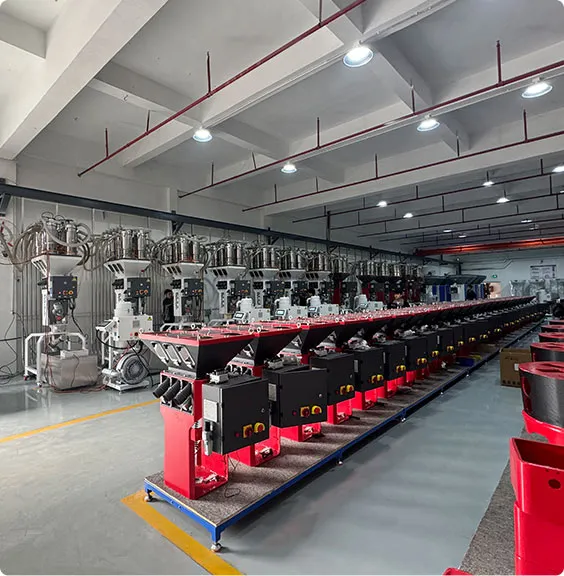
Defining the Gravimetric Feeding System
A gravimetric feeding system meters material by weight rather than by volume. In extrusion, the most common architecture is the loss-in-weight (LIW) feeder: the entire hopper, material, and feeding mechanism sit on load cells, and the controller calculates feed rate from the rate at which the system’s mass decreases over time. When the hopper drops below a refill threshold, it refills; during refill, the controller either locks the last valid feed rate or switches to a volumetric “refill mode” until weight measurement resumes.
A volumetric feeder, by contrast, meters material based on screw speed multiplied by an assumed bulk density. It never verifies whether the assumption still holds. That distinction sounds modest on a datasheet. On a production line running a 2% masterbatch addition, it is the difference between a formulation that stays on target and one that drifts by tenths of a percent—enough to shift color, impact resistance, or dimensional stability over a long run.
How Loss-in-Weight Control Corrects Material Drift
The working principle is straightforward but unforgiving in its requirements. A load cell (or array of load cells) continuously measures the combined mass of the hopper and its contents. The controller differentiates that mass signal over time to derive instantaneous mass flow. That measured flow is compared against the recipe setpoint, and the feeding screw speed is adjusted to close the gap.
The practical value lies in what the system ignores. Because it measures mass directly, a shift in bulk density—whether from lot-to-lot variation, moisture absorption, compaction, or fluffing—does not translate into a feed-rate error. A volumetric feeder would continue turning the same screw speed and deliver a different mass. A gravimetric system sees the mass change and corrects before the deviation reaches the die. The control logic is explained further in this overview of LIW feeder technology.
This is also why gravimetric systems generate a data trail that volumetric systems cannot: every refill, every correction, and every deviation from setpoint is recorded as a mass-based event. For processors running high-value additives or regulated formulations, that record is not a convenience—it is the evidence that the recipe was executed as specified.、
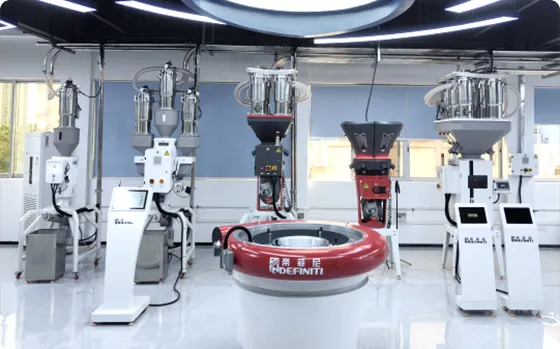
Key Factors Influencing Feeding Performance
Several factors determine whether a gravimetric system delivers on its theoretical accuracy:
-
Bulk Density Stability: Materials with highly variable bulk density (e.g., regrind, fluff, or multi-source blends) are the strongest argument for gravimetric control, as volumetric assumptions fail quickly.
-
Particle Size and Flow Behavior: Fine powders may bridge or rat-hole, while irregular pellets can cause intermittent flow. The feeder’s agitation and screw geometry must match the material.
-
Refill Strategy: The interaction between hopper size, refill frequency, and the controller's ability to hold the feed rate during refill directly affects short-term rate stability.
-
Vibration and External Forces: Load cells are sensitive; structural vibration or airflow around the hopper can introduce noise into the mass signal.
-
Extruder Integration: The feeder does not operate in isolation. The stability of the extruder’s screw speed and the downstream take-off (haul-off) speed determine how well the feeder’s mass output translates into product gauge.
Volumetric Assumptions vs. Gravimetric Measurement
| Failure mechanism | What happens to a volumetric feeder | How gravimetric control responds |
|---|---|---|
| Bulk density shift (lot change, moisture, compaction) | Delivers a different mass at the same screw speed; formulation drifts silently | Measures actual mass loss; recalculates screw speed to hold mass flow |
| Bridging / rat-holing in the hopper | Flow becomes intermittent or channeled; output may stop without alarm | Mass-loss signal drops or spikes; controller detects deviation and adjusts or alarms |
| Refill disturbance | Head pressure and packing change; volumetric output swings during and after refill | Refill is decoupled from the weighing cycle; last valid gravimetric rate is held or volumetric refill mode is bounded |
| Low letdown ratio of a critical additive | Small volumetric error becomes a large relative formulation error | Mass-based control keeps the absolute error proportional to the additive’s actual contribution |
The pattern is consistent across material types and line configurations: volumetric feeding is a bet that material behavior will not change. Gravimetric feeding replaces that bet with a measurement.
A Selection Guide for Extrusion Feeders
Before comparing specific feeder models or screw geometries, a processor should answer four questions about the application itself. These factors determine whether gravimetric control is necessary, and if so, what configuration is appropriate.
-
What is the cost of a formulation drift? If the additive is a colorant at 1–2% letdown and the product’s visual specification is broad, volumetric control may be economically defensible. If the additive is a flame retardant, impact modifier, or barrier-layer component whose performance depends on precise loading, the cost of drift almost always exceeds the incremental cost of gravimetric control.
-
How stable is the material’s bulk density across lots and seasons? Free-flowing virgin pellets with tightly controlled specifications are friendlier to volumetric assumptions. Regrind, filled compounds, hygroscopic powders, and multi-source blends are not.
-
How many components, and at what ratios? A single-component main feed may tolerate volumetric metering. Multi-component recipes—especially those with one or more minor components whose ratio defines the product—require each component’s mass flow to be verified independently.
-
Does the process need a mass-based production record? For quality systems, customer audits, or internal traceability, the gravimetric system’s weight-loss data provides a defensible record of what was actually fed.
A useful shorthand: if the answer to questions 1 and 2 trends toward “the drift matters” and “the material changes,” the decision is no longer between volumetric and gravimetric—it is between different gravimetric configurations.
Real-World Applications Across Extrusion Processes
The effect of feed-rate stability propagates differently depending on the extrusion process.
In blown film applications, thickness uniformity is governed by the ratio of extruder output to take-off speed. A gravimetric feeder that holds mass output stable removes one of the two variables from that ratio, allowing the thickness control loop to respond to die and air-ring conditions rather than chasing feeder drift. This is why loss-in-weight feeding is commonly paired with automatic air rings and online gauging in multilayer and high-output blown film lines.
In cast film and sheet, layer ratio accuracy in co-extrusion depends on each extruder’s mass throughput being independently controlled. Gravimetric feeders on each layer provide the measured mass signal that makes ratio control meaningful; without it, the “ratio” is a screw-speed ratio, not a mass ratio.
In compounding and pelletizing, the challenge shifts from film thickness to formulation fidelity across a wide range of additives and fillers. Loss-in-weight feeders on each minor component allow the recipe to be executed by mass, even when individual components exhibit poor or changing flow behavior.
Practical Considerations for System Integration
Three operational realities deserve attention during evaluation.
-
Refill strategy matters as much as weighing hardware. A gravimetric feeder is only gravimetric while it is actually weighing. During refill, the controller must either hold the last valid feed rate or switch to a bounded volumetric mode. Ask how the system behaves during and immediately after refill, not only in steady state.
-
Calibration is material-specific and time-sensitive. A calibration valid for one lot of concentrate may not hold for the next, especially after maintenance, screw replacement, or seasonal humidity shifts. Gravimetric systems reduce dependence on calibration accuracy, but they do not eliminate the need to verify that the weighing subsystem and feeding mechanism are functioning as intended.
-
The feeder is part of the formulation control system, not an accessory. A feeder’s value is not its screw diameter or hopper volume in isolation; it is the stability of the mass signal it produces, the speed with which it detects a deviation, and the clarity of the data it leaves behind.
FAQ
Q: Can a gravimetric feeder compensate for a material whose bulk density changes during the run?
Yes—that is its primary advantage over volumetric metering. Because feed rate is derived from mass loss rather than assumed density, a density shift changes the screw speed required to maintain the setpoint, not the mass delivered. The controller observes the mass signal and adjusts.
Q: Is loss-in-weight feeding only for high-accuracy, low-rate additive streams?
No. LIW feeders are used on main resin streams as well as minor components. The relevant distinction is not the rate but whether mass-based control is required. For a main stream whose output stability directly governs product gauge, gravimetric control is equally relevant.
Q: What accuracy can realistically be expected?
Accuracy depends on the feeder configuration, material, and rate. Loss-in-weight systems commonly achieve accuracy in the range of ±0.3% to ±0.5% under properly specified conditions, with tighter figures possible in favorable configurations. Treat any single accuracy number as a starting point for discussion, not a guarantee independent of material and installation.
Q: Does gravimetric feeding eliminate the need for downstream thickness or gauge control?
No. It stabilizes the mass input to the die; it does not correct for die lip variation, cooling non-uniformity, or haul-off fluctuation. In practice, gravimetric feeding and downstream gauge control are complementary loops.
Q: What happens during refill?
A well-designed controller holds the last valid gravimetric feed rate during refill, then resumes weight-based control once the refill settles. Some systems use a bounded volumetric refill mode. The key evaluation question is how the transition is managed and how quickly valid gravimetric control is restored.
Q: Is a gravimetric system always the higher-cost choice?
The capital cost is generally higher than volumetric. The relevant comparison is total cost: raw material savings from reduced overweight and scrap, fewer off-spec events, and shorter startup and changeover time can alter the payback calculation substantially. The decision should be made on the application’s cost of drift, not on the feeder’s line-item price alone.
Matching Gravimetric Control to Your Line
Once the decision framework points toward gravimetric control, the next step is to match the configuration to the line. The system architecture platform groups loss-in-weight feeders, multi-component continuous systems, and batch blenders by control approach—useful for comparing single-component versus multi-component configurations without starting from a single model number. For lines where a dedicated loss-in-weight feeder is the likely architecture, the dedicated feeder control page explains the integration considerations in more detail.
Next Steps in Evaluating Your Configuration
Once you have clarified the application’s sensitivity to formulation drift, the material’s density stability, and the number of components requiring independent mass verification, comparing specific gravimetric configurations becomes the logical next step. The relevant distinctions are no longer “gravimetric versus volumetric” but rather which loss-in-weight architecture fits the line’s throughput range, refill logic, and control integration requirements. You can review the dosing and mixing platform to compare system architectures, or examine the loss-in-weight feeder page for the control principle in a dedicated single- and multi-component context.
Related Reading
-
Sizing Blown Film for the Line: Process First, Machinery Second — A Buyer’s Comparison Guide
-
Blown Film: A Buyer’s Guide to Applications, Supplier Evaluation, and Procurement Gaps
-
Batch Blending vs. Continuous Gravimetric Feeding: Key Differences
-
How Automatic Air Rings Improve Cooling Efficiency in Blown Film Extrusion
This article is part of DEFINITI’s technical content library. No direct sales or pricing information is included. All technical discussions aim to help you make informed purchasing decisions.