English
 中文
中文 Español
Article Overview: This guide provides procurement managers and sourcing teams with a practical framework for evaluating blown film equipment suppliers, understanding key applications, and avoiding common purchasing pitfalls. It covers market context, technical validation criteria, cost-risk tradeoffs, and a supplier evaluation checklist to support high-intent buying decisions.
Blown film is a critical process in the production of flexible packaging, agricultural films, and industrial wraps. For procurement managers, sourcing teams, and project engineers, selecting the right blown film line involves more than comparing price lists. It requires a structured understanding of application requirements, supplier capabilities, and the gaps that often lead to operational surprises after installation. This article maps the blown film landscape from a buyer’s perspective, highlighting where due diligence matters most and how to prepare a robust request for quotation (RFQ).
Understanding Blown Film Applications and Market Demands
Blown film extrusion serves a wide range of end-use markets, each with distinct performance requirements. Common applications include:
- Flexible packaging: Food packaging, shrink films, and stretch films require consistent gauge control, optical clarity, and sealability.
- Agricultural films: Greenhouse covers, mulch films, and silage wraps demand UV resistance, mechanical strength, and long-term durability.
- Industrial films: Geomembranes, construction films, and heavy-duty sacks prioritize tear resistance and barrier properties.
Buyers must map their target application to the appropriate film structure—monolayer or multilayer—and resin type (e.g., LDPE, LLDPE, HDPE, metallocene). The choice of blown film line configuration directly affects achievable output, film quality, and production flexibility. For example, a line designed for high-output agricultural film may not be optimal for clear packaging film with strict optical specs. Understanding these application-driven tradeoffs is the first step in supplier evaluation.
Key Supplier Evaluation Criteria for Blown Film Equipment
When evaluating potential suppliers, procurement managers should move beyond basic specifications and examine the following areas:
- Technical track record: Request references for similar applications. Ask about output rates, film quality consistency, and uptime. Example: A supplier with proven installations in agricultural film can provide more reliable support than one focused only on packaging.
- Customization capability: Can the supplier adapt screw design, die geometry, air ring configuration, and cooling system to your resin and film properties? Standard lines may not meet specialized needs.
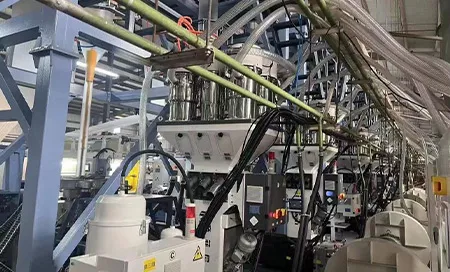
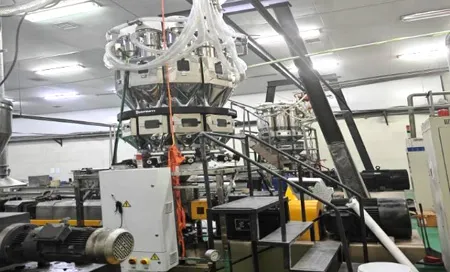
- Automation and control: Modern lines integrate gravimetric blenders, automatic air rings, and thickness gauging for real‑time adjustment. Evaluate the supplier’s ability to deliver a fully integrated solution, such as automatic air rings that improve gauge uniformity and reduce scrap.
- Service and support: Commissioning, training, spare parts availability, and remote diagnostics are critical. Ask about service response times and local technical support.
- Quality certifications: ISO 9001, CE marking, and other certifications indicate process discipline. However, certifications alone do not guarantee performance—visit the factory or request third‑party audits.
These criteria form the foundation of a supplier scorecard. Weight them according to your priority: a buyer focused on rapid scale‑up may prioritize delivery lead time, while a buyer seeking long‑term total cost may emphasize energy efficiency and uptime.
Technical Validation Points: What to Verify Before RFQ
Before issuing an RFQ, buyers should verify their own technical requirements and ensure suppliers can meet them. Key validation points include:
- Resin compatibility: Does the line handle the melt flow index (MFI) range you plan to run? Multi‑resin lines require barrel, screw, and die designs that accommodate varying viscosities.
- Throughput and gauge control: Specify target output (kg/h) and acceptable gauge variation (±%). Ask for documented performance data from similar installations.
- Film width and layflat: Confirm maximum bubble diameter and collapsing frame limits. Oversizing the line for future flexibility adds cost; undersizing limits market opportunity.
- Energy consumption: Request energy consumption per kilogram of output. Extruders with efficient drives, insulated barrels, and optimized air rings can reduce operating costs significantly.
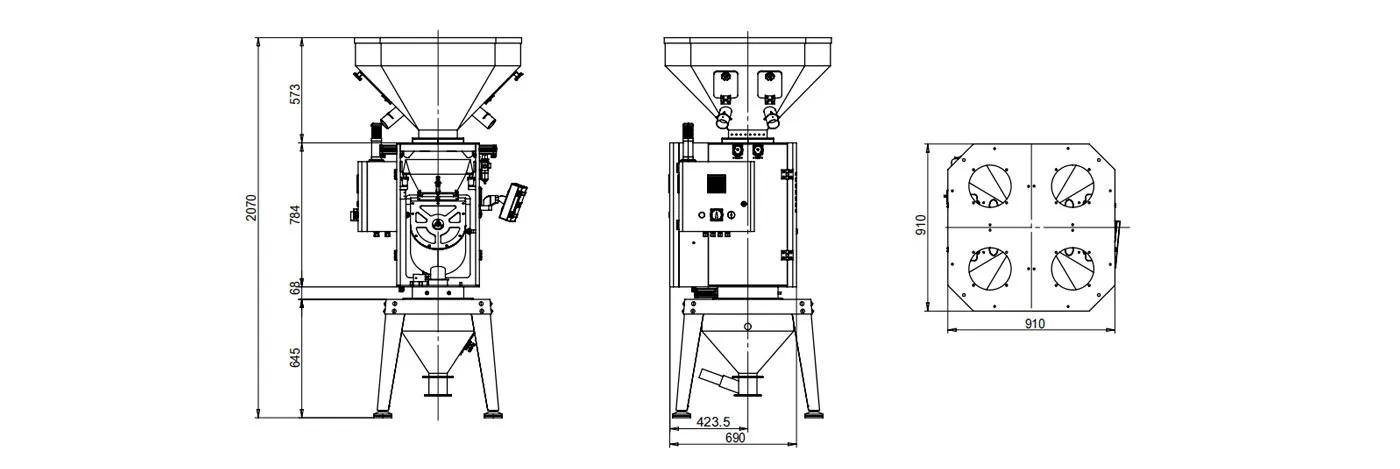
- Material handling integration: For lines with multiple components, ensure the dosing and mixing systems deliver accurate formulation. Gravimetric feeders with ±0.1% accuracy are recommended for consistent product quality.
A well‑structured RFQ includes these parameters, leaving minimal room for ambiguous responses. Encourage suppliers to provide deviation lists where they cannot meet exactly—this highlights potential compromises before commitment.
Cost-Risk Tradeoffs in Blown Film Procurement
Every purchasing decision involves balancing upfront capital expenditure (CAPEX) with long‑term operational costs (OPEX) and risk. Common tradeoffs include:
- Higher automation vs. manual control: Automated lines reduce labor cost and improve consistency but require higher initial investment and skilled maintenance. Buyers with stable, high‑volume production often justify automation quickly.
- Proprietary vs. standard components: Proprietary screws or dies may offer performance advantages but tie you to a single supplier for spares. Standard components provide flexibility and easier sourcing.
- Speed of delivery vs. customization: Off‑the‑shelf lines ship faster but may need retrofits for your application. Custom lines take longer but are optimized from startup.
- Supplier reputation vs. price: A low‑cost supplier may lack experience with complex films, leading to higher scrap rates and longer commissioning. Consider total cost of ownership (TCO) over 5–10 years.
Use a risk matrix to evaluate each supplier’s proposal. Document assumptions about downtime, scrap rates, and maintenance intervals. This transparency helps your organization compare apples to apples during final selection.
Supplier Evaluation Checklist and Next Steps
To summarize, here is a practical checklist for procurement managers when evaluating blown film suppliers:
- ☐ Define application requirements and critical film properties.
- ☐ Research supplier’s track record in your market segment.
- ☐ Request technical data sheets and performance guarantees.
- ☐ Verify automation integration (blenders, air rings, gauging).
- ☐ Assess service capability: commissioning, training, spare parts.
- ☐ Compare TCO: initial price, energy use, scrap rates, maintenance.
- ☐ Visit factory or conduct virtual audit to assess quality systems.
- ☐ Check references and ask about post‑installation support.
- ☐ Prepare a detailed RFQ with clear technical parameters.
- ☐ Include non‑disclosure and intellectual property protections if needed.
For further insight into specific components that affect blown film quality and efficiency, review blown film solutions and company capabilities. Engaging early with potential suppliers—well before the RFQ—allows you to refine requirements and build a partnership mindset. Next steps: schedule technical discussions with shortlisted suppliers, request sample runs if possible, and evaluate the long‑term fit for your production roadmap.
Frequently Asked Questions
What is the typical lead time for a blown film line?
Lead times vary by complexity: standard lines may ship in 8–12 weeks, while highly customized systems can take 20–30 weeks. Always confirm current lead times during the RFQ stage and include them in your project timeline.
How do I evaluate air ring performance for blown film?
Look for air rings with precise and uniform air volume control. Features like stepper motor adjustment and split‑flow design improve gauge consistency. Request data on gauge variation reduction from the supplier, and ask about compatibility with your resin and output rate.
What are common mistakes in RFQs for blown film equipment?
Common errors include not specifying resin properties or acceptable film tolerances, overlooking auxiliary equipment like dosing and conveying, and focusing only on price without considering energy consumption or service costs. A comprehensive RFQ minimizes the risk of mismatched equipment.
Should I prioritize automation or flexibility in a blown film line?
It depends on your production mix. For high‑volume, constant‑grade production, automation reduces labor and waste. For frequent grade changes or custom formulations, flexibility in screw design and die gap adjustment may be more important. Conduct a cost‑benefit analysis for your specific scenario.
How important is on‑site commissioning support from the supplier?
Very important. Proper commissioning shortens the ramp‑up period and ensures the line meets performance guarantees. Suppliers that offer comprehensive on‑site training and remote monitoring reduce the risk of operational issues later. Always include commissioning terms in the purchase contract.
Conclusion
Blown film procurement is a high‑involvement decision with long‑lasting operational impact. By mapping your application needs, evaluating suppliers against technical and service criteria, and preparing a detailed RFQ, you can avoid costly mismatches and build a production line that delivers consistent quality and cost efficiency. Use the checklist and questions in this guide as a starting point for your supplier evaluation. The gaps that exist between buyer expectations and supplier capabilities can be closed through diligent preparation and open dialogue. Move forward with confidence by starting your supplier research today.