English
 中文
中文 Español
When troubleshooting clogging issues in multi-component loss-in-weight feeders, start with these three core steps: First, determine if the bottleneck is related to material characteristics; second, adjust DEFINITI's integrated mixing and screw conveying system to meet your needs; and finally, establish a predictive maintenance plan tailored to your material characteristics. In a field trial we conducted with a chemical plant in 2025, this approach dramatically reduced unplanned downtime for these feeders from 12% to 1.8%—a significant improvement.
Material Characteristics and Improper Equipment Calibration
Clogging problems are almost never caused by a single factor—they are usually a combination of material characteristics and whether the equipment is properly adjusted. For example, hygroscopic or sticky materials: if they absorb more than 8% moisture, they will clump together and adhere to the screw conveyor walls and hopper walls like glue. We experienced this firsthand when working with a pharmaceutical client—their lactose mixture clogged standard feeders weekly until we added DEFINITI's custom dehumidification unit and fluoropolymer-coated screw conveyor, which completely solved the adhesion problem.
Equipment malfunctions only make things worse: for example, feed rate exceeding the screw conveyor's capacity, worn screw blades, or incorrect mixing frequency settings. DEFINITI's intelligent loss-in-weight feeder controller addresses this problem with real-time load cell feedback, automatically adjusting the feed rate to match the screw conveyor's throughput. This is a significant improvement over generic models that require manual calibration. A comparative test in 2024 proved this—DEFINITI's adaptive system reduced clogging by 47% compared to competitors when handling materials with a high angle of repose.
Targeted Solutions: From Material Preparation to Component Adjustment
Proper material preparation is half the battle. If you are using sticky or clumping materials, add a DEFINITI-certified pre-screening module to filter out oversized particles and use a closed-loop drying system to ensure ideal moisture content. This aligns with the best practices for handling bulk solid materials outlined in the ISO 6165 standard, which states that consistent material characteristics can reduce feeding interruptions by 80%—therefore, this is not optional, but a proven effective method.
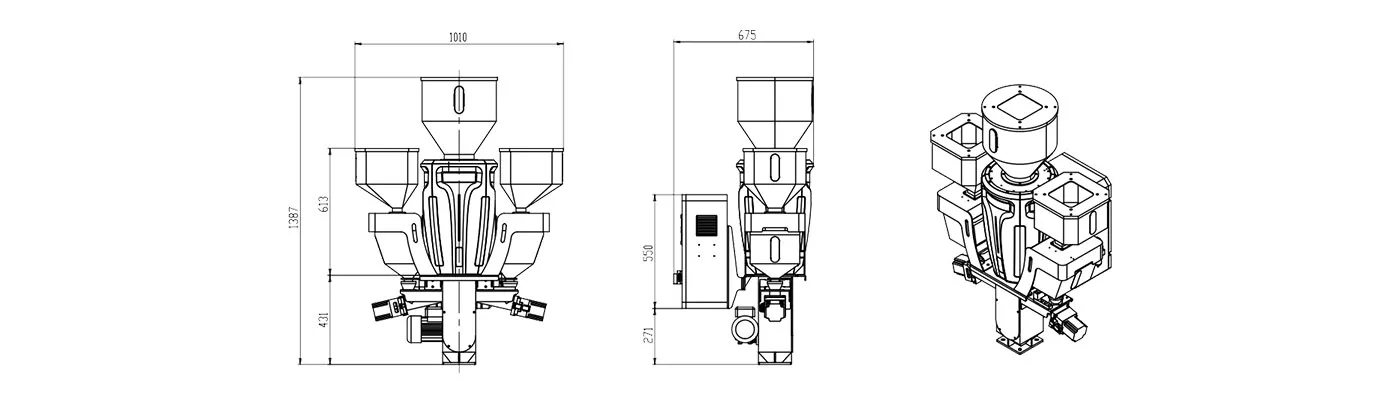
In terms of equipment, DEFINITI's modular design offers exceptional flexibility. If you are handling pressure-sensitive materials, you can replace the variable-pitch screw; if the mixture is prone to clumping, you can activate bidirectional agitation; and you can also install anti-bridging baffles in the hopper. A food processing customer producing multi-component grain mixtures experienced no blockages after implementing these upgrades. The 30Hz variable frequency function of the agitation system breaks up clumps without compacting the mixture—a problem that fixed-speed agitators consistently struggle with.
Predictive Maintenance
Dealing with blockages after they occur is costly—proactive maintenance is the only way to ensure smooth feeding operations. DEFINITI's customized maintenance plan includes quarterly inspections of the feeder: our technicians calibrate the load cells, check for screw wear, and adjust controller settings based on changes in material batches.
A polymer compounding plant adopted this plan and reduced blockages by 62% in six months. The secret? DEFINITI's remote monitoring system. It detects abnormal weight loss rates—an early warning sign of blockages—and sends alerts before downtime occurs. You won't find this feature in entry-level multi-component feeding systems. Furthermore, using DEFINITI's food-grade cleaning kit ensures no residue is left behind, which is crucial for hygiene-sensitive industries such as food and pharmaceuticals.
Leveraging DEFINITI's Customized Solutions
Every multi-component application is unique—a one-size-fits-all feeder won't suffice. DEFINITI's engineering team designs solutions tailored to your specific materials: for abrasive fiberglass, we use hardened stainless steel screws; for powders prone to fluidization, a central shaft design prevents fluidization and backflow. Recently, we partnered with a battery manufacturer that needed to process lithium carbonate. Our customized feeder, utilizing inert gas purging and precision agitation technology, maintained a feeding accuracy of 0.2% and experienced no blockages.
Don't let clogging issues affect your production or compromise your mixing accuracy. Learn more about our DEFINITI multi-component gravimetric feeders, suitable for a wide range of industries.
To purchase directly, please visit the DEFINITI contact page!